
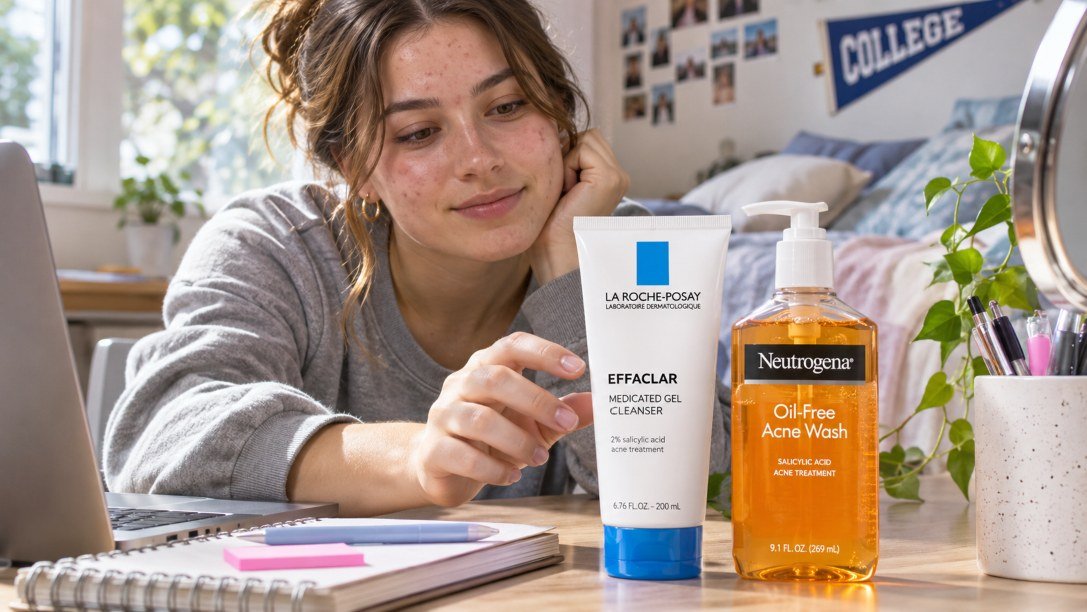
College life can make skincare a challenge. You may spend hours attending classes, commuting, studying, or working part-time. When breakouts appear, finding a product that fits your schedule and budget becomes another concern.
La Roche-Posay and Neutrogena are two familiar names in acne skincare. Both offer facial cleansers, moisturizers, and products that target blemishes. However, their prices, textures, and ingredient combinations are not identical.
La Roche-Posay is not automatically better than Neutrogena for acne-prone skin. Both brands offer useful products, and neither guarantees clearer skin simply because of its name.
La Roche-Posay may appeal to students seeking particular formulations for oily or sensitive skin. Neutrogena often provides practical alternatives at lower prices.
Your decision should depend on the type of acne you have, the ingredients your skin tolerates, and the amount you can reasonably spend on skincare each month.
Why College Students Need a Different Approach to Acne Skincare

Acne can continue throughout college, even if you rarely experienced breakouts during your teenage years.
Hormonal activity, increased oil production, and blocked pores are major contributors. Stress and changes in daily habits may also affect existing acne.
For example, you may notice more breakouts during examination periods when your sleep schedule changes. Long days on campus can also mean more exposure to sweat, sunscreen, and environmental dirt.
However, acne is not simply caused by having a dirty face. Washing too frequently or using strong products can irritate your skin without addressing the underlying problem.
A student-friendly skincare routine should be affordable, easy to maintain, and appropriate for the skin concern being treated.
You do not need a separate product for every possible issue. A few well-chosen items are usually more practical than an expensive collection you rarely use consistently.
La Roche-Posay for Acne-Prone Skin: What Does It Offer?
La Roche-Posay has several skincare collections, each serving a different purpose. Its Effaclar range includes products for oily and blemish-prone skin, while Toleriane focuses on gentle cleansing and moisturizing.
The brand offers different textures and ingredient combinations, allowing users to select products according to their concerns.
Effaclar Cleansers for Excess Oil
La Roche-Posay Effaclar cleansers are available in different formulations.
Some focus on removing surface oil and everyday buildup. Others contain acne-treatment ingredients intended to help clear blocked pores.
The Effaclar Medicated Gel Cleanser, for example, includes salicylic acid, making it relevant for students who regularly experience blackheads or whiteheads.
However, medicated cleansers are not always necessary.
If your skin already feels dry, using an active cleanser morning and night may cause additional discomfort. A plain cleanser may be a better companion to a separate acne treatment.
Choose an acne cleanser because its ingredients address your breakouts, not simply because it belongs to a premium skincare range.
Effaclar Acne Treatments
La Roche-Posay also offers products that target breakouts more directly.
Depending on the product and country, these may contain ingredients such as benzoyl peroxide or salicylic acid.
Unlike ordinary cleansers, leave-on treatments remain on the skin for longer periods.
They may be useful for recurring acne, although the appropriate treatment depends on whether your main concern is clogged pores, inflamed pimples, or a combination of both.
Stronger or more frequent application does not necessarily improve results. It can instead increase dryness and peeling.
Toleriane Moisturizers for Skin Comfort
Not every college student with acne has oily skin.
Some experience breakouts alongside dryness, redness, or sensitivity. Others develop irritation after using acne medication.
La Roche-Posay’s Toleriane collection includes moisturizing products that can help support comfortable daily skincare.
Certain formulas feature ingredients such as glycerin, ceramides, and niacinamide.
These ingredients help maintain hydration and skin-barrier function.
A moisturizer will not replace acne medication, but it can help make treatment easier to tolerate.
La Roche-Posay may be worth the additional cost if a particular formulation noticeably improves your skin comfort. The benefit comes from the product itself rather than its premium positioning.
Neutrogena for Acne-Prone Skin: Is It a Good Alternative?
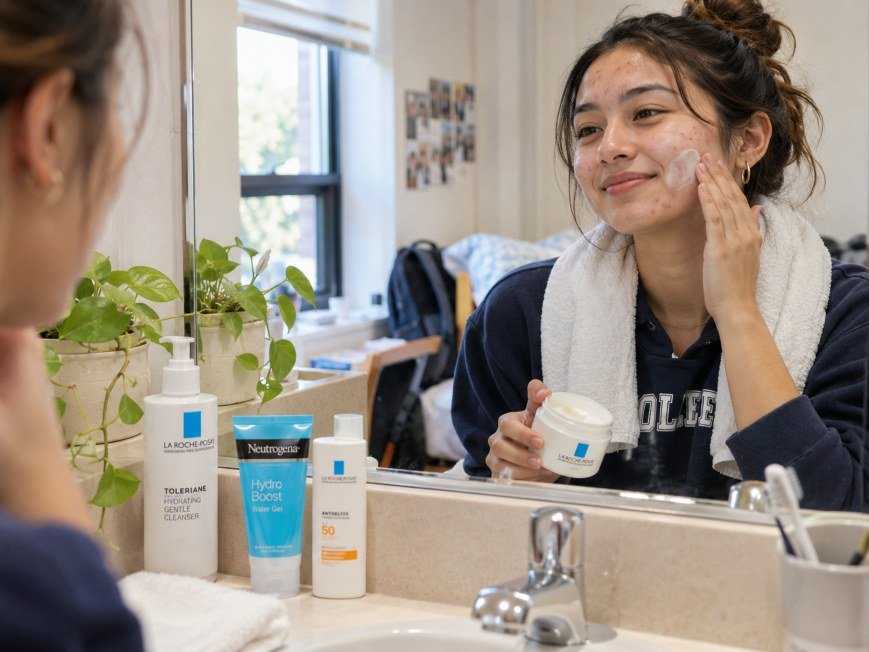
Neutrogena sells a wide variety of facial skincare products, including medicated cleansers, acne treatments, and lightweight moisturizers.
Its widespread retail availability can make it convenient for students who need to replace products quickly.
The brand also offers several options at accessible prices, though costs vary by retailer and location.
Neutrogena Oil-Free Acne Wash
Neutrogena Oil-Free Acne Wash is designed for skin that develops pimples and blocked pores.
Its standard medicated versions use salicylic acid to help loosen buildup within pores.
This makes the cleanser relevant for students dealing with blackheads, whiteheads, and excess surface oil.
However, the product name does not mean every version contains exactly the same ingredients.
Some formulations include fragrance, while fragrance-free alternatives are available in certain markets.
Read the packaging carefully, especially if your skin has reacted to scented cleansers before.
Neutrogena Stubborn Acne Treatments
Neutrogena’s Stubborn Acne collection includes targeted products intended to address persistent breakouts.
Selected formulas use benzoyl peroxide, an established ingredient for treating inflammatory acne.
It may help reduce the appearance of red pimples and limit new breakouts when used appropriately.
However, benzoyl peroxide can dry the skin and may bleach towels or clothing.
A higher concentration is not automatically better for everyone. Students with sensitive skin should pay particular attention to treatment strength and usage instructions.
Neutrogena Hydro Boost Moisturizers
Neutrogena’s Hydro Boost range is designed around lightweight hydration.
Some formulas contain hyaluronic acid and have a gel-like consistency that spreads easily.
This can be appealing if you dislike thick creams, particularly during warm weather.
However, Hydro Boost products are moisturizers rather than primary acne treatments.
They can support a routine by reducing dryness, but they should not be expected to clear persistent acne independently.
Neutrogena can be a sensible option when you want effective skincare ingredients without committing to a more expensive product range.
La Roche-Posay vs Neutrogena: Which Brand Wins in Each Category?
Instead of choosing one overall winner, consider which brand better matches your priorities.
| Comparison | 🔵 La Roche-Posay | 🟠 Neutrogena |
| General positioning | Premium skincare with specialized ranges | Accessible everyday skincare |
| Acne cleansers | Effaclar cleansing options | Oil-Free Acne and other cleansers |
| Common acne ingredients | Salicylic acid and benzoyl peroxide in selected products | Salicylic acid and benzoyl peroxide in selected products |
| Gentle skincare | Toleriane cleansing and moisturizing options | Gentle and fragrance-free options in selected ranges |
| Moisturizer texture | Gel, lotion, and cream formulations | Gel, lotion, and cream formulations |
| Price category | Generally higher | Often more affordable |
| Oily skin | Suitable options available | Suitable options available |
| Dry, acne-prone skin | Dedicated moisturizing options | Several hydrating alternatives |
| Best reason to choose | A specific formula suits your skin particularly well | You want a practical routine at a lower cost |
| Overall advantage | Specialized product selection | Budget flexibility |
Neither brand wins every category.
For example, Neutrogena may offer the better purchase if an inexpensive cleanser meets your needs. La Roche-Posay may be worth considering when your skin responds better to one of its gentle formulas.
A higher price is not evidence that a product treats acne more effectively.
Which Ingredients Matter More Than the Brand?
When selecting acne products, examine the active ingredients before comparing packaging or advertising claims.
Salicylic Acid for Blackheads and Whiteheads
Salicylic acid helps loosen dead skin cells and buildup that contribute to blocked pores.
It can be useful for students who frequently notice small bumps, blackheads, or whiteheads around the nose, forehead, and chin.
Both brands sell products featuring this ingredient.
The difference between them lies in the overall formula, including cleansing agents, moisturizers, and other added ingredients.
If salicylic acid makes your face tight or flaky, consider reducing its frequency or reviewing the rest of your routine.
Benzoyl Peroxide for Inflamed Breakouts
Benzoyl peroxide acts against bacteria involved in acne and can help reduce inflammatory pimples.
It is available in different concentrations.
A lower concentration may be easier to tolerate than a stronger formulation, especially when starting treatment.
Dryness and irritation are possible with either brand.
Students should also remember that benzoyl peroxide can discolor fabrics, including pillowcases and towels.
Adapalene for Repeated Clogged Pores
Adapalene is a topical retinoid used to treat acne.
It helps regulate the shedding of skin cells within pores, which can reduce the formation of new blockages.
This can make it useful for people who experience recurring blackheads, whiteheads, and inflamed breakouts.
However, adapalene may initially cause dryness or peeling.
It should be used according to the product instructions or a dermatologist’s advice. People who are pregnant or planning pregnancy should avoid starting topical retinoids without appropriate medical guidance.
Niacinamide, Ceramides, and Hyaluronic Acid
Not every useful skincare ingredient directly treats pimples.
Niacinamide can help support skin-barrier function, while ceramides contribute to the skin’s protective structure.
Hyaluronic acid helps retain moisture.
These ingredients can improve comfort when your main acne treatment makes the skin dry.
However, hydrating ingredients do not replace medications that treat the underlying causes of acne.
The American Academy of Dermatology’s acne treatment guidelines identify several evidence-supported treatment options, including benzoyl peroxide, topical retinoids, and salicylic acid.
Which Brand Is Better for Your Specific Skin Type?
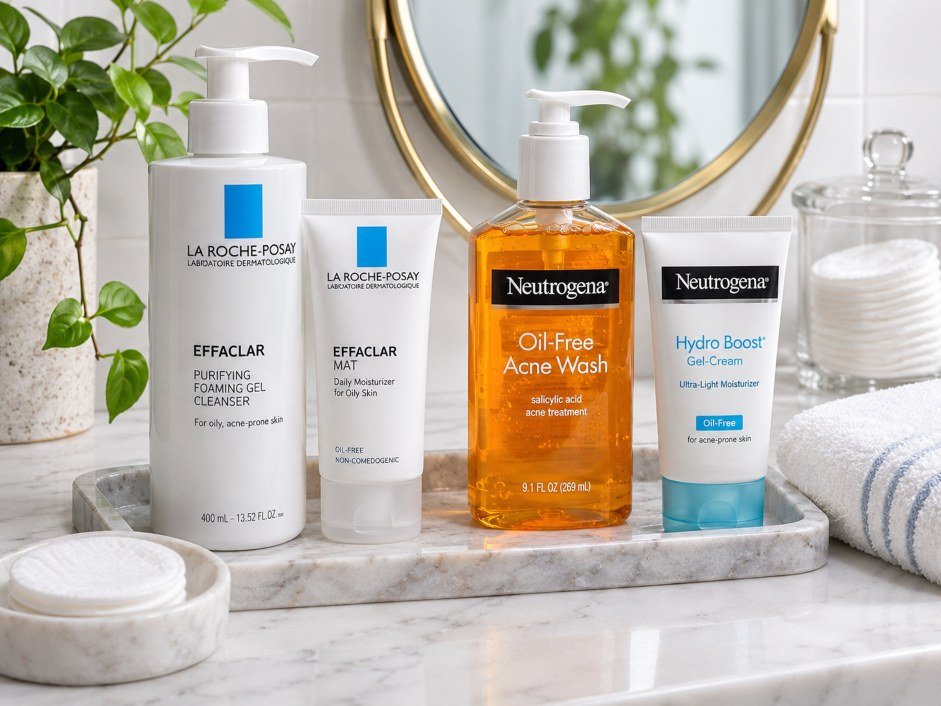
Your skin’s behavior offers more useful guidance than a brand’s popularity.
Oily Skin With Frequent Blackheads
If oil builds up quickly around your forehead and nose, a salicylic acid cleanser or another suitable acne treatment may be helpful.
Both brands provide relevant options.
Try to avoid combining several exfoliating products simply because your skin feels oily.
Too much exfoliation can leave your skin irritated without delivering better results.
Sensitive Skin With Occasional Pimples
Students with sensitive skin should pay attention to more than the acne medication.
A cleanser’s fragrance, texture, and additional ingredients may affect comfort.
You could consider a gentle Toleriane cleanser or a suitable fragrance-free Neutrogena product.
If using a medicated treatment, begin cautiously and follow the instructions.
Sensitive skin does not require you to avoid all acne treatments. It requires you to choose and introduce them carefully.
Dry Skin That Still Develops Acne
Dryness and acne can occur together.
For this skin type, cleansing and moisturizing deserve particular attention.
Use a mild cleanser that does not leave the face feeling tight, then apply a suitable moisturizer.
Choose acne medication separately according to the type of breakout.
You may find a La Roche-Posay moisturizer more comfortable, or you may prefer a Neutrogena alternative. Neither choice is automatically superior.
Inflamed Acne and Painful Pimples
For red or swollen pimples, benzoyl peroxide or other appropriate acne medication may be more relevant than a basic cleanser alone.
Deep, painful lumps deserve additional attention because they can lead to scarring.
If you frequently develop these breakouts, consulting a dermatologist is more useful than repeatedly switching between brands.
Is La Roche-Posay Worth Paying More for on a Student Budget?
An expensive routine can become difficult to maintain when you need to purchase replacement products every month.
A practical comparison should consider the long-term cost, not only the price of the first bottle.
For example, a cleanser that lasts several months may be affordable even if its upfront price is higher.
On the other hand, purchasing an expensive moisturizer is difficult to justify if a less expensive one keeps your skin equally comfortable.
Before spending extra money, ask yourself three questions:
- Does the premium product contain an ingredient or formulation feature I actually need?
- Have I experienced discomfort with simpler alternatives?
- Can I afford to replace this product regularly?
If the answer to the final question is no, choose something that fits your budget.
Consistency with an affordable, suitable routine is generally more valuable than purchasing premium products inconsistently.
You can also mix products from different brands. Your cleanser, moisturizer, sunscreen, and acne medication do not need matching labels.
A Practical Morning and Evening Routine for College Students
A simple routine is easier to maintain when your timetable changes every week.
Start with the essentials rather than adding several treatments at once.
Morning: Clean, Moisturize, and Protect
- Wash your face gently. Use a mild cleanser appropriate for your skin. Avoid scrubbing with rough cloths or exfoliating tools.
- Apply your morning treatment if prescribed or directed. Not every acne medication belongs in the morning routine. Follow its instructions.
- Use moisturizer. Choose a product that does not leave your face uncomfortable or excessively greasy.
- Apply sunscreen. Look for broad-spectrum SPF 30 or higher, preferably in a non-comedogenic formula suitable for your skin.
If you spend time walking between college buildings or commuting during daylight, sun protection is particularly important.
Evening: Remove Buildup and Treat Acne
- Cleanse your face. Remove accumulated oil, sunscreen, and makeup without aggressive rubbing.
- Use your acne medication as directed. If you are new to treatment, avoid introducing multiple strong active ingredients simultaneously.
- Moisturize if needed. A suitable moisturizer can help reduce dryness associated with acne medication.
The most useful routine is one you can follow consistently, even when assignments and examinations occupy most of your time.
Why Expensive Skincare Sometimes Fails to Improve Acne
Paying more does not solve every skincare problem.
Sometimes, people focus heavily on cleansers and moisturizers while overlooking the type of acne they actually have.
For instance, changing from an affordable face wash to a premium cleanser may improve how your skin feels, but it may not be sufficient for persistent inflammatory acne.
Other common problems include using too many products, choosing unsuitable treatments, or changing routines before results have had time to develop.
Acne can also be influenced by hormonal conditions and other factors that skincare products alone cannot fully address.
If several over-the-counter products have failed, spending more on another cleanser may not be the most effective next step.
At that stage, professional advice can help identify whether you need a different treatment approach.
How Long Should You Use a Product Before Judging Results?
A cleanser may feel comfortable immediately, but acne improvement takes longer.
You can often assess whether a basic moisturizer suits your skin within a shorter period.
Medicated acne treatments require more patience.
Many people need approximately six to eight weeks of consistent treatment before meaningful improvement becomes noticeable. More complete clearing may take several months.
Switching between La Roche-Posay and Neutrogena every few days can make it difficult to determine which product helps.
Instead, keep your routine stable unless you experience significant irritation or another adverse reaction.
The American Academy of Dermatology’s advice on skincare habits that worsen acne explains why frequent product changes and excessive cleansing can interfere with acne management.
Give a suitable treatment enough time to work, but do not continue using a product that causes severe burning, swelling, or worsening irritation.
Mistakes to Avoid When Comparing Acne Products
A few purchasing and skincare mistakes can make an otherwise reasonable routine less effective.
Buying Several Medicated Products at Once
A salicylic acid cleanser, exfoliating toner, retinoid, and benzoyl peroxide treatment may all sound useful.
However, combining them without a clear plan can cause irritation.
Start with an appropriate treatment and only add other products when there is a reason to do so.
Choosing Based on Packaging Alone
Clinical-looking packaging and premium branding may create confidence, but they do not guarantee results.
Read the active ingredients and the intended use.
Assuming Oily Skin Does Not Need Moisturizer
Even oily skin can become dry or irritated.
A lightweight moisturizer may help maintain comfort without creating an overly heavy feeling.
Changing Products After Every Breakout
An individual pimple does not necessarily mean your whole routine has stopped working.
Evaluate changes over several weeks rather than reacting to every new blemish.
Ignoring Persistent Acne
If acne becomes painful, leaves scars, or does not improve with an appropriate routine, medical treatment may be necessary.
Early professional care may help reduce long-term skin damage.
Can You Combine La Roche-Posay and Neutrogena Products?
Yes. Mixing the two brands is possible and may even make your routine more affordable.
For example, you might prefer a Neutrogena cleanser and a La Roche-Posay moisturizer.
Alternatively, you could use a La Roche-Posay cleanser with a Neutrogena moisturizer.
The brand combination itself is not the issue.
What matters is whether the individual products suit your skin and whether their active ingredients can be used together safely.
Be particularly careful when combining multiple medicated acne products.
If you already use a prescription treatment, ask your dermatologist or pharmacist before adding another active ingredient.
You do not need a complete skincare set from one company to manage acne effectively.
Final Verdict
La Roche-Posay and Neutrogena both offer worthwhile options for acne-prone skin.
La Roche-Posay may suit students looking for a particular specialized cleanser, moisturizer, or acne treatment. Its Toleriane products may also interest people who want gentle skincare alongside acne management.
Neutrogena provides a broad range of everyday skincare options and may be easier to fit into a limited monthly budget.
However, choosing an expensive product is not a shortcut to clearer skin.
For college students, Neutrogena is often a practical first option when affordability matters. La Roche-Posay becomes worth considering when a particular formula offers a benefit your current products do not provide.
Focus on suitable active ingredients, adequate moisturizing, sun protection, and consistent use.
If your acne is severe or continues despite treatment, seek professional advice rather than repeatedly purchasing new skincare products.
Frequently Asked Questions
1. Is La Roche-Posay better than Neutrogena for hormonal acne?
Neither brand is automatically better for hormonal acne. Both offer treatments that may help manage breakouts, but persistent hormonally influenced acne sometimes requires prescription medication. If pimples frequently appear around the jawline or become deep and painful, a dermatologist can help determine the most appropriate treatment.
2. Which brand is better for oily and acne-prone college students?
Both brands have suitable products for oily, acne-prone skin. La Roche-Posay Effaclar and Neutrogena’s medicated acne-cleansing ranges offer options for excess oil and clogged pores. Compare ingredients, skin tolerance, and cost rather than assuming one brand works better for everyone.
3. Can I use Neutrogena face wash with La Roche-Posay moisturizer?
Yes. You can use a Neutrogena cleanser followed by a La Roche-Posay moisturizer if both products are appropriate for your skin. Using different brands does not create a problem by itself. Check the active ingredients if your cleanser contains acne medication, especially when using other treatments.
4. Which brand helps remove acne scars and dark spots faster?
Neither brand can guarantee faster removal of acne scars. Some products may gradually improve post-acne discoloration, but deep or raised scars often need professional treatment. Sunscreen can help prevent dark marks from becoming more noticeable. For persistent scarring, consult a dermatologist rather than relying only on over-the-counter skincare.