
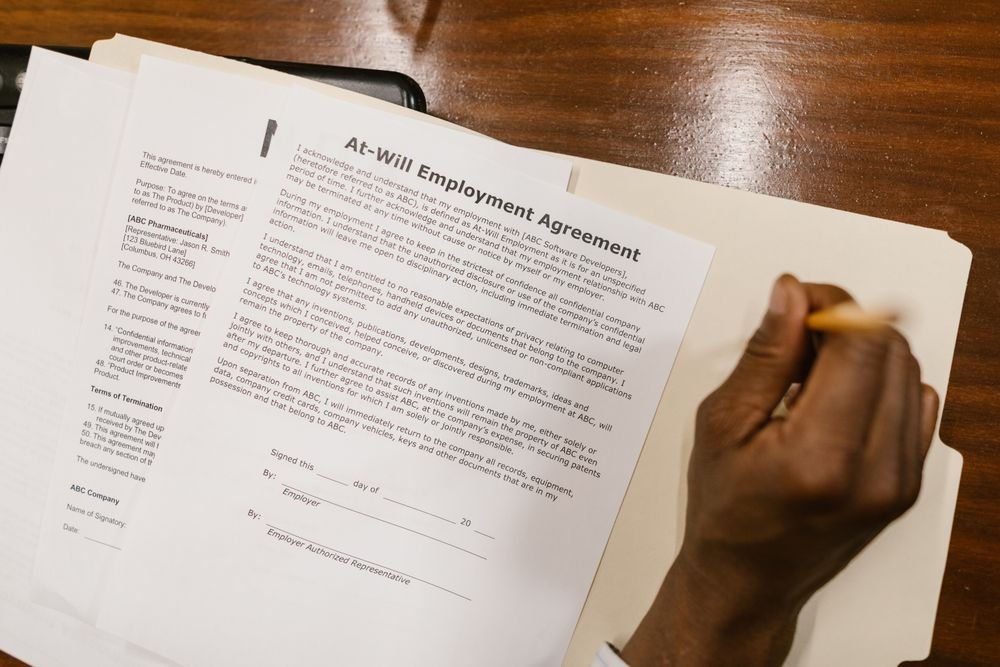
For small businesses in the UK, employment contracts are more than a formal document. A well-structured contract establishes clear expectations between employer and employee, covering important matters such as pay, working hours, responsibilities, holidays, and notice periods.
As businesses grow, having appropriate documentation and access to professional HR guidance can also help employers manage workplace issues more consistently. For SMEs without an in-house HR department, external HR support services can provide practical assistance with creating contracts and handling broader employment matters.
Employment Contracts Clarify the Working Relationship
An employment contract sets out the terms under which an employee works for a business. Some terms may be expressly agreed, while others can arise through legislation, collective agreements or established workplace practices.
A written statement of employment particulars should generally provide employees with key information about their employment.
Depending on the role, an employment contract may cover:
- Job title and responsibilities
- Salary or hourly rate
- Working hours
- Holiday entitlement
- Place of work
- Probationary arrangements
- Notice periods
- Pension arrangements
- Sick pay
- Disciplinary and grievance procedures
- Confidentiality requirements
The exact terms should reflect the business and the role rather than relying on a generic document.
Small Businesses Benefit from Clearer Employment Terms
Smaller employers sometimes operate informally, particularly when they have only a few employees. However, unclear arrangements can become problematic when disagreements arise.
For example, uncertainty about working hours, holiday entitlement or notice requirements can create unnecessary disputes.
A properly drafted contract gives employees and employers a clear reference point. It can also help establish consistent expectations from the beginning of employment.
This does not mean a contract needs to be unnecessarily complicated. It needs to accurately reflect the employment relationship and comply with applicable UK employment law.
Contracts Should Be Reviewed as Businesses Develop
An employment contract that was appropriate when a business had five employees may not necessarily remain suitable as the company grows.
Changes to working arrangements, benefits, responsibilities, locations or company policies can create a need to review employment documentation.
Businesses may also need to consider developments such as:
- Hybrid or remote working
- Flexible working arrangements
- Changes in responsibilities
- Salary changes
- Additional benefits
- New company policies
- Changes to working locations
Regularly reviewing employment documentation can help ensure that contracts remain aligned with how the business actually operates.
HR Support Services Can Help SMEs Manage Employment Matters
Small businesses do not always have the resources to employ a dedicated HR professional. This is where external HR support services can provide practical assistance.
An HR adviser can help employers understand their responsibilities, develop appropriate documentation and establish processes for managing employees.
Support may cover areas such as:
- Employment contracts
- HR policies
- Recruitment
- Disciplinary procedures
- Grievance procedures
- Performance management
- Absence management
- Employee relations
- Redundancy processes
- Employment law guidance
The level of support can be adapted according to the size and requirements of the business.
Good Contracts Work Alongside Effective HR Policies
An employment contract is only one part of an effective HR framework.
Businesses may also need policies covering areas such as:
- Health and safety
- Equality and diversity
- Holiday and absence
- Data protection
- Flexible working
- Disciplinary procedures
- Grievances
- Social media
- Remote working
Policies can provide more detailed guidance than the employment contract itself and help employees understand how workplace processes operate.
Keeping policies consistent with contractual terms is important, particularly where a policy forms part of the contractual relationship.
Professional HR Guidance Can Reduce Avoidable Problems
Employment law can be complex, particularly when a business is dealing with a situation for the first time. Poorly drafted documentation or inconsistent processes can increase the risk of disputes.
External HR support can provide SMEs with professional guidance on employee matters.
This can be particularly useful during periods of growth, when a business moves from an informal approach to a more structured HR process.
Employment Contracts Should Support the Business and Its Employees
For UK SMEs, a good employment contract should provide clarity without creating unnecessary complexity. It should accurately describe the employment relationship and work alongside the company’s HR policies and procedures.
As businesses grow, reviewing contracts and obtaining appropriate HR support services can help employers maintain consistent processes and respond to employment matters more confidently.
For small businesses without dedicated internal HR expertise, external support from providers such as Harwood HR Solutions can offer a practical way to strengthen employment documentation while providing broader HR guidance when needed.
Read more interesting articles at themagazinetimes.